Table of Contents
Nickelodeon shaped ’90s childhood: Nick’s Golden Age
There are some sounds we never forget.
🎶NICK… NICK… NICK… NICK… NICK… NICK… NICK… NICK.., NICKELODEON…🎶
If you’re reading this, you probably know the distinct shade of orange that meant freedom, fun, and a giant green splat of slime. For us, the children of the ’90s, Nickelodeon wasn’t just a TV channel—It was a companion. A place where children were invited to be unapologetically, unstoppably… kids. This is why the ’90s era of Nickelodeon is widely hailed as the “Golden Age” of children’s television.
Today we’re unpacking, how exactly did Nickelodeon shaped ‘90s childhood? And why do so many of us now believe that era was the golden age of children’s television?
The Birth of a Revolution: Why ‘90s Nick Was Different
Unlike the traditional, orderly networks our parents watched, Nickelodeon clearly didn’t care about rules. It changed the rules entirely. The colors were loud. The cartoons were weird. The hosts were chaotic. The jokes were borderline inappropriate for a kids’ channel — which made them perfect.
Where other channels tried to teach us, Nickelodeon tried to hang out with us.
Bright green slime, Loud music stings, Messy game shows, Kids talking directly to the camera. It wasn’t polished — it was rebellious, creative, slightly gross… and completely magnetic.
Nickelodeon created a universe where kids ruled and adults were just background noise. The secret sauce of ’90s Nick was simple: respecting its audience.
August 11, 1991: The Day Everything Changed
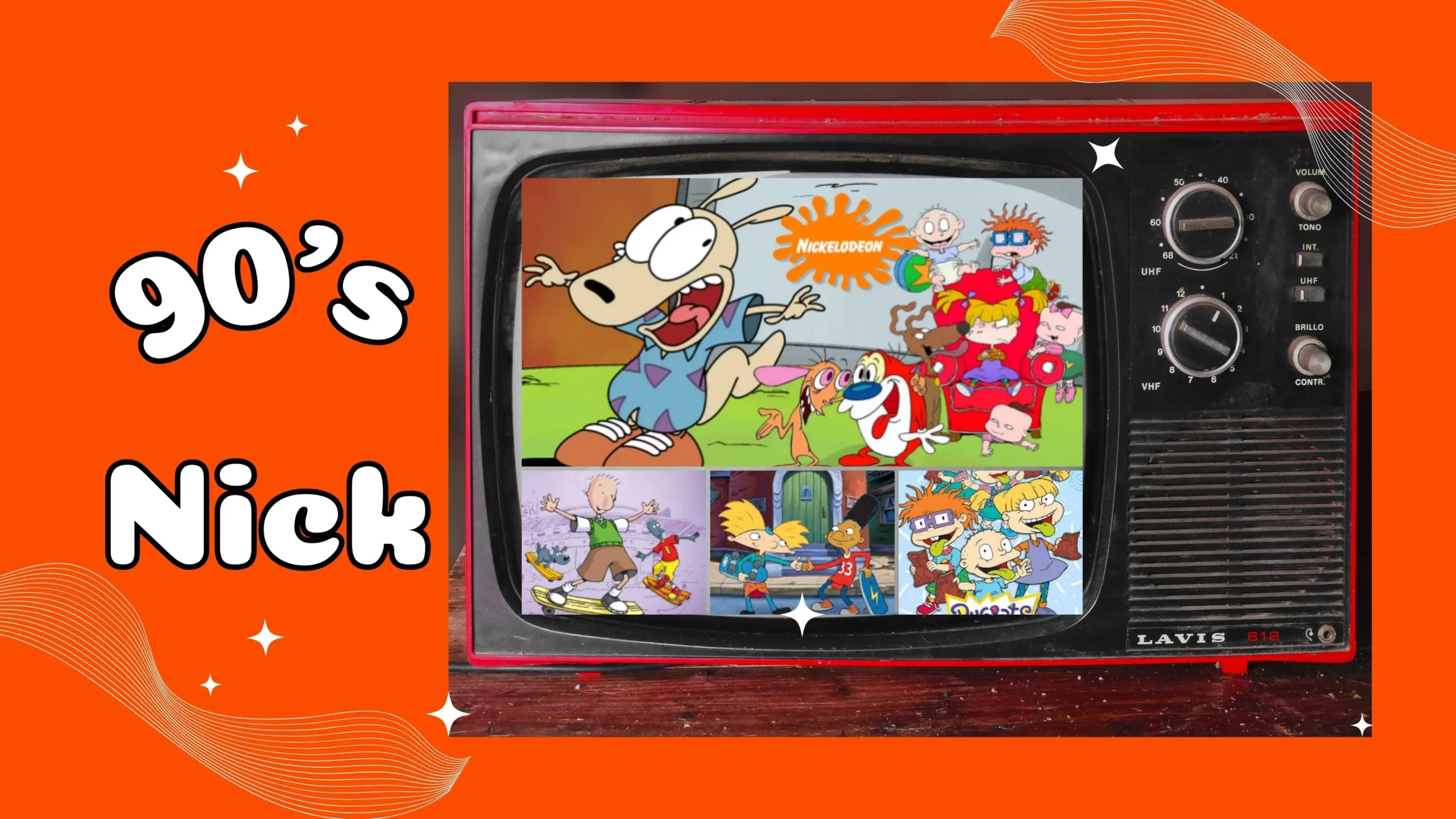
Watch Doug on Prime VideoWe can pinpoint the exact moment the Golden Age truly began. On August 11, 1991, Nickelodeon unveiled something unprecedented: a 90-minute block featuring three brand-new original animated series—Doug, Rugrats, and The Ren & Stimpy Show. These were the first “Nicktoons”, and they changed animation forever.
Each show was wildly different from the others, yet they shared a common DNA: they were personal, idiosyncratic, and creator-driven.
- Doug gave us Doug Funnie, an anxious preteen navigating the minefield of adolescence in the fictional town of Bluffington. His imagination allowed him to become Quailman or a superstar rock hero. Doug taught kids that it was okay to be shy, that everyday life had value, and that feelings mattered.
- Rugrats flipped the script on how we saw babies. Rugrats turned the world upside down . Ordinary household objects became giant, terrifying, or magical landscapes. It reflected how children actually saw the world — huge, confusing, and full of adventure. Themes of family, imagination, fear, and bravery filled every episode.
- The Ren & Stimpy Show was something else entirely, a transmission from another planet—grotesque, unpredictable, and absolutely hilarious. The show proved that children’s animation could be genuinely artistic and that kids could handle sophisticated, absurdist humor.
These three shows proved there was a massive audience hungry for cartoons that were smart, funny, and emotionally honest.
SNICK: When Saturday Nights Belonged to Us
If you weren’t allowed to stay up late on Saturday nights, you begged and negotiated until you could. Because Saturday Night Nickelodeon—SNICK—was appointment television for an entire generation.
That iconic orange couch. The lineup that shifted over the years but always delivered. Clarissa Explains It All. Are You Afraid of the Dark? All That. Kenan & Kel. These weren’t just shows; they were rituals.
Are You Afraid of the Dark? holds a special place in 90s nostalgia. The horror anthology series featured the Midnight Society. The show respected children’s ability to handle genuine scares while keeping things age-appropriate. Some of those episodes—the clown, the mirror, the pool creature—still pop up in our nightmares decades later.
Then there was All That, which debuted in 1994 and became Nickelodeon’s answer to Saturday Night Live. The sketch comedy show launched careers we’re still watching today. The show had an urban, pop flavor that felt irreverent and cool—like it was made by kids, for kids, who were in on all the best jokes.
And who among us doesn’t have “Welcome to Good Burger, home of the Good Burger” permanently lodged in our brains?
Game Shows That Made Us Want to Get Messy
Nickelodeon’s game shows were unlike anything else on television. They weren’t about answering trivia questions politely; they were about chaos, competition, and getting absolutely covered in slime.
Legends of the Hidden Temple combined trivia with physical challenges and a genuinely impressive set featuring the talking stone head Olmec. We all yelled at our TVs when teams couldn’t assemble the Shrine of the Silver Monkey (three pieces—how was it so hard?). The show turned every living room into an arena where we judged the Purple Parrots and Blue Barracudas from the safety of our couches.
GUTS and Nick Arcade and Figure It Out rounded out a lineup that made game shows feel like adventures rather than quiz bowls. These shows trusted that kids wanted to participate, get dirty, and experience something physical and exciting.
Shows That Grew Up With Us
Watch on Amazon PrimePart of what made ’90s Nickelodeon special was its willingness to tackle real issues without becoming preachy.
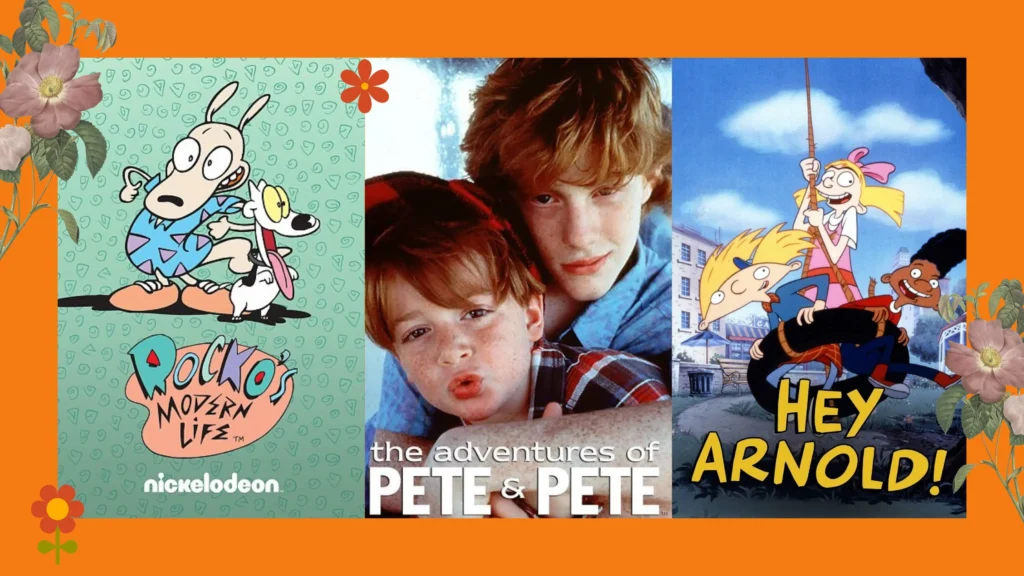
Hey Arnold! presented one of the most realistic and ethnically diverse urban environments in children’s television. Arnold’s unnamed city felt genuinely lived-in, populated by complex characters facing poverty, family dysfunction, and social anxiety. Helga Pataki—with her secret Arnold shrine and defensive cruelty masking deep insecurity—remains one of the most nuanced female characters ever created for children’s animation.
Rocko’s Modern Life is the show that hits different when you rewatch it as an adult. On the surface, it was about a wallaby navigating life in the fictional city of O-Town. Underneath, it was a biting satire of American consumerism, bureaucracy, and the struggles of young adulthood.
The Adventures of Pete & Pete was perhaps the most artistically ambitious show Nickelodeon ever produced. With its indie rock soundtrack, cameos from musicians like Iggy Pop and Michael Stipe, and storylines involving personal superheroes and metal plates that picked up radio signals, the show embraced weirdness with unparalleled commitment.
A Visual World That Defined Our Childhood Aesthetic
Nickelodeon didn’t just make shows—it created an entire visual language. That orange splat logo was instantly recognizable. The network’s commitment to colorful anarchy and wacky set design made every show feel like it belonged to the same universe, even when their content couldn’t have been more different.
This aesthetic coherence meant something. Identifying with Nickelodeon was easy because we could instantly identify a Nickelodeon show. The network had a mission beyond entertainment: to create a space where kids felt in control, where their sense of humor and chaos was celebrated rather than corrected.
Why Does ’90s Nick Still Matter?
Here’s the thing about nostalgia: it’s not just about remembering. It’s about understanding why certain things stuck.
‘90s Nickelodeon mattered because it treated kids with respect. It assumed we could handle complex emotions, absurdist humor, genuine scares, and stories without tidy morals. It gave creative people room to make personal, weird, ambitious television and trusted that young audiences would respond.
The shows from this era didn’t just entertain us—they shaped how we think about storytelling, humor, and what children’s media can be. When we put on Rugrats for our own kids or try to explain why All That was basically our SNL, we’re not just chasing nostalgia. We’re sharing something that genuinely influenced who we became.
Frequently Asked Questions – FAQs
Why is Nickelodeon green slime so iconic?
Green slime became the network’s visual trademark for rebellion and fun. Originating from the show You Can’t Do That on Television, slime represented the “anti-adult” stance of the network—it was messy, unpredictable, and a badge of honor for anyone lucky enough to be doused in it.
What was the significance of the “SNICK” block?
SNICK (Saturday Night Nickelodeon), launched in 1992, was a dedicated 2-hour programming block that gave kids their own version of “Prime Time.” It created a ritualistic viewing experience for the 90s generation, featuring the Big Orange Couch and shows like Are You Afraid of the Dark? and All That, which served as a “Saturday Night Live” for children.
Why was Nickelodeon Studios in Orlando so famous?
Known as the “First World Headquarters for Kids,” Nickelodeon Studios at Universal Studios Florida was the physical heart of the network. Fans could take tours, see the “Slime Geyser” erupt, and watch live tapings of game shows. It made the network feel real and accessible, reinforcing the idea that Nickelodeon was a place where kids actually belonged.
How did ’90s Nicktoons influence modern animation?
Modern hits like SpongeBob SquarePants (which debuted in 1999) and Adventure Time owe their existence to the creator-driven model of early Nicktoons. By hiring independent animators and giving them creative freedom, Nickelodeon moved the industry away from “toy-commercial” cartoons and toward character-rich, artistic storytelling that appeals to both kids and adults.
What were the most influential Nicktoons of the 90s?
The “Big Three” original Nicktoons launched on August 11, 1991, were Doug, Rugrats, and The Ren & Stimpy Show. These shows revolutionized animation by focusing on creator-driven styles rather than studio-mandated looks. Later hits like Hey Arnold! and Rocko’s Modern Life further shaped ’90s childhood by tackling real-world urban issues and “adult-adjacent” humor.
Why is Nickelodeon green slime so iconic?
Green slime became the network’s visual trademark for rebellion and fun. Originating from the show You Can’t Do That on Television, slime represented the “anti-adult” stance of the network—it was messy, unpredictable, and a badge of honor for anyone lucky enough to be doused in it.