


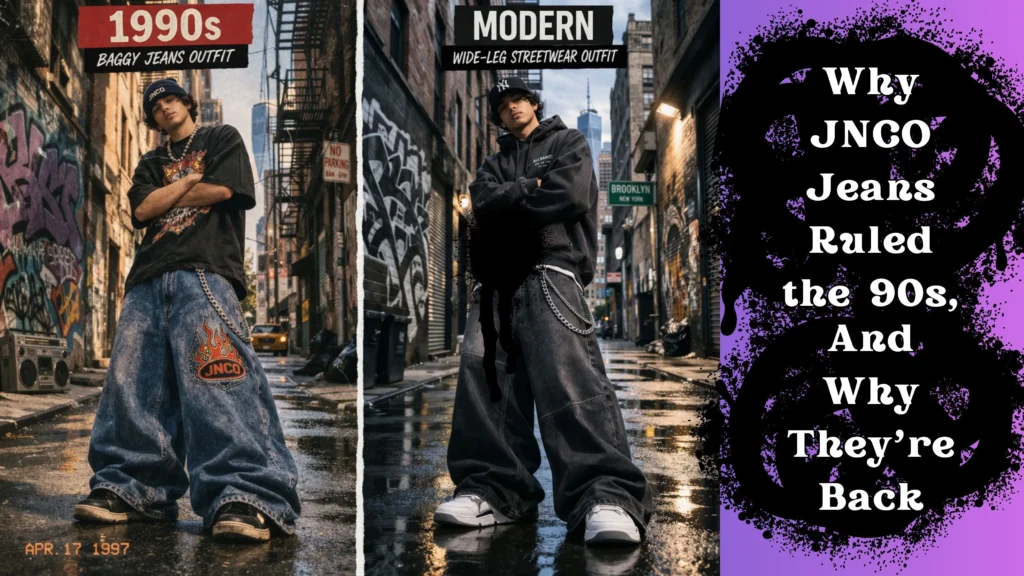
Imagine stepping into a 1990s skatepark or underground rave: baggy pants pooling at the ankles, massive leg openings flapping with every move, and the bold JNCO Crown logo embroidered like street art. These weren’t just jeans — they were a statement. A rebellion against tight fits, mainstream fashion, and “the man”.
So, why did JNCO jeans become popular in the 90s? The answer lies in a perfect storm of comfort, counterculture identity, brilliant marketing, and timing. What started as a small LA brand turned into a multi-million-dollar phenomenon that defined an era of youth rebellion. Here’s the full story.
(JNCO stands for Judge None, Choose One — a philosophy of individuality that resonated deeply with teens who felt misunderstood.)

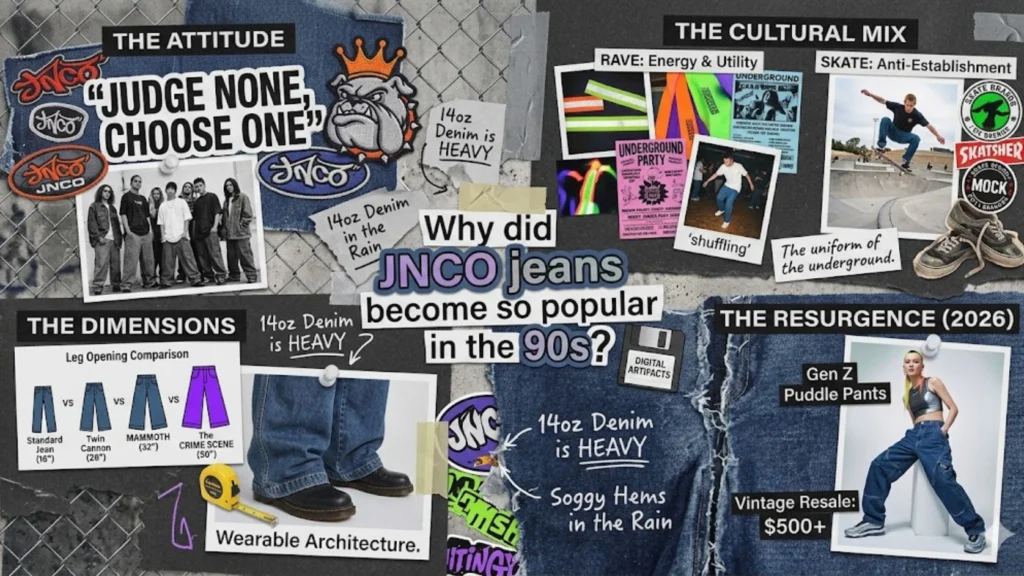
Table of Contents
The Origins of JNCO Jeans – From East LA Streets to a 90s Phenomenon
JNCO was founded in 1985 by Moroccan-born, French-raised brothers Haim Milo Revah and Jacques Yaakov Revah in Los Angeles. They started their company, Revatex, with just $200,000 in savings, initially producing private-label clothing for retailers like Merry-Go-Round.
The brothers drew inspiration from the loose-fitting pants worn by Latino youth in East LA — a practical, anti-establishment look that stood in stark contrast to the skinny Levi’s 501s dominating mainstream fashion at the time. They wanted to challenge conventionalism and honor individuality.
Wide-leg JNCO styles first hit retailers around 1993, with leg openings starting at 20–23 inches. Early designs featured oversized back pockets, contrast stitching, and graffiti-inspired embroidery. Unlike many competitors, JNCO manufactured most of its jeans in the US, at a large facility owned by the Revah brothers.
At first, growth was slow. But by the mid-90s, something shifted. Teens were hungry for fashion that felt like theirs — not handed down from corporate boardrooms.

Why JNCO Jeans Exploded in Popularity – The Perfect Storm of 90s Youth Culture
Why were JNCO jeans baggy and popular in the 90s? It wasn’t just the size. It was what they represented.
1. Comfort and Practicality as Rebellion
In an era of restrictive skinny jeans, JNCOs offered freedom of movement. Skaters loved the extra room for tricks and the deep pockets for tools, wax, or even a spare can of spray paint. The heavy denim felt durable and substantial — like armor for suburban kids navigating school hallways and weekend adventures.
The dramatic silhouette (legs that could reach 40–50+ inches at peak) created a visual spectacle. Walking in JNCOs made a statement: “I take up space, and I don’t apologize for it”.
2. Subculture Takeover – Skate, Rave, and Nu-Metal
JNCO became the unofficial uniform for 90s alternative youth:
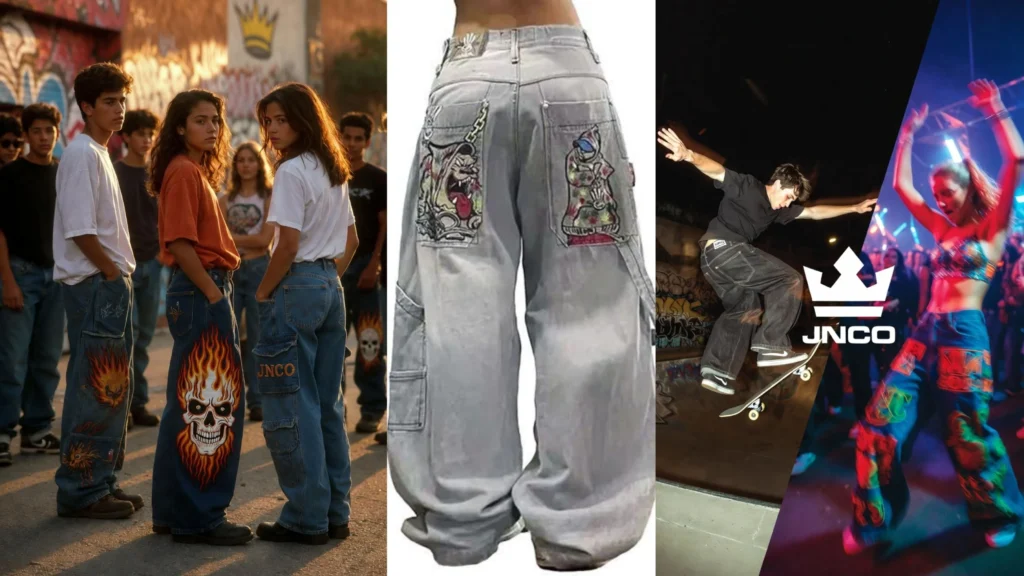
- Skaters and surfers: Practical for movement and embraced at parks and shops like Ron Jon Surf Shop.
- Ravers: The pants were perfect for all-night dancing; breakdancing teams and DJs were gifted pairs to spread the brand organically.
- Nu-metal fans: Bands like Limp Bizkit and Korn helped popularize the look, blending hip-hop baggy influences with aggressive metal energy.
Wearing JNCOs signaled you belonged to the “freaks,” skaters, or ravers — not the preppy jocks or mainstream crowd. It was a badge of non-conformity in an otherwise conformist decade.
3. Genius Grassroots Marketing That Made JNCO a Household Name
Much of JNCO’s success came from smart, targeted marketing led by expert Steven Sternberg. Instead of big TV ads, the brand focused on authenticity:
- Free pairs were handed out to DJs, breakdancers, skaters, and extreme athletes (like BMX rider Todd “Wild Man” Lyons).
- Graffiti murals painted near high schools and skate spots by artists like Joseph Montalvo (Nuke), who also helped design the iconic logo.
- Ads in niche magazines like Thrasher.
- Sponsorships of extreme sports events and raves.
- Strong presence in mall chains like PacSun, Hot Topic, and others after Merry-Go-Round’s bankruptcy.
This counterculture marketing felt organic. It wasn’t pushy — it was cool kids telling other cool kids. Schools even banned JNCOs in some areas (fears of tripping hazards or “hiding things”), which only boosted their rebellious appeal.
The Peak Years (1995–1999) – When JNCO Jeans Ruled the World
Sales tell the story best:
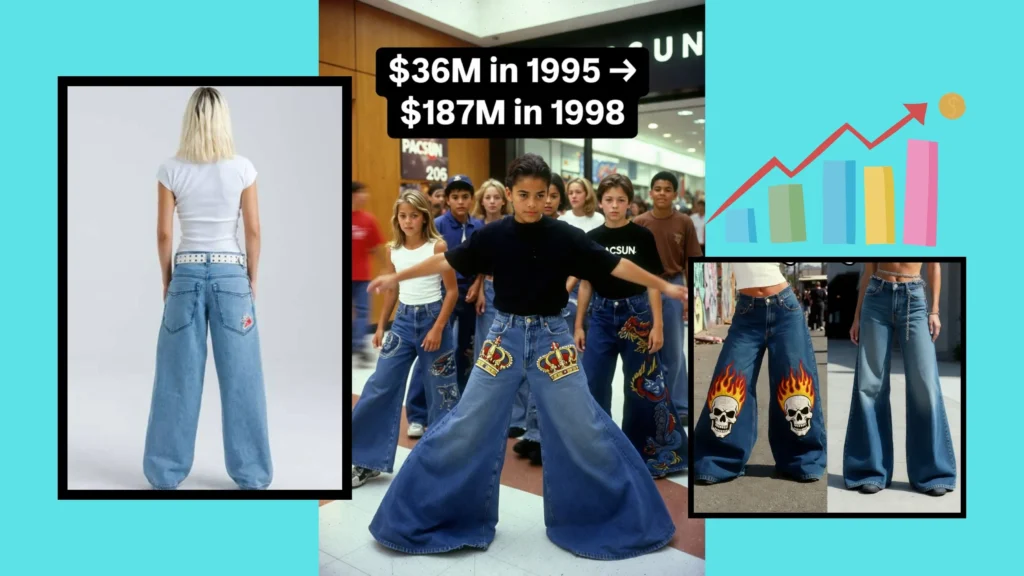
- 1995: Around $36 million
- 1998: Peaked at $186.9 million (with JNCO accounting for ~10% of PacSun’s sales at one point)
- 1999: Dropped to about $100 million as the wave crested.
At its height, JNCO offered extreme styles with leg openings up to 50 inches or more. Popular models included the “Kangaroo” (with boxing gloves graphic) and designs with flaming skulls, dragons, and bold embroidery. The pants became so iconic that they defined mall culture, music videos, and teen bedrooms across America.
What Made JNCO Jeans Stand Out from Every Other 90s Trend?
Here’s a quick comparison:
| Feature | JNCO Jeans | Levi’s 501s / Mainstream Jeans | Other Baggy Brands |
| Leg Opening | 23–50+ inches (dramatic flare) | Straight/slim (14–18 inches) | Moderate baggy |
| Philosophy | Judge None, Choose One – rebellion | Classic American workwear | Varied, less unified message |
| Target Audience | Skaters, ravers, nu-metal fans | Broad mainstream | Niche without strong marketing |
| Marketing | Grassroots, subculture seeding | Big budget TV/print | Less aggressive |
| Emotional Appeal | Individuality + community | Timeless reliability | Functional but forgettable |
JNCO felt different. It wasn’t just denim — it was a movement. The oversized back pockets, heavy fabric, and artistic details made every pair unique. Teens weren’t buying pants; they were buying belongings.
The Rapid Decline – Why JNCO Jeans Fell Out of Favor by the Early 2000s
Fashion is cyclical. By the late 90s and early 2000s:
- The look became oversaturated and mainstream (losing its edgy appeal).
- Trends swung hard toward slim fits (Abercrombie, American Eagle, early 2000s prep).
- Quality and availability issues emerged after factory changes.
- Revatex faced challenges, eventually closing its main LA facility around 2000 and the brothers stepping back by 2003.
The pants that once screamed rebellion started looking dated to a new generation chasing skinny jeans and low-rise styles.
JNCO Jeans Today – The 2020s Y2K Revival and Why the Legacy Lives On
Fast-forward to 2026: JNCO is experiencing a vibrant revival. Led by original founder Milo Revah and his daughter Camilla, the brand is reissuing wide-leg styles (including modern Mammoth and Twin Cannons models with 40-inch openings) while staying true to its roots.
Gen Z discovered JNCO through TikTok thrift hauls, Y2K nostalgia, and celebrities embracing oversized silhouettes. Wide-leg jeans are back in mainstream fashion, and JNCO benefits as the authentic originator. Vintage pairs still command high resale prices on Depop and eBay, while new drops blend heritage with sustainable practices.
The philosophy remains: Judge None, Choose One. In a world of fast fashion and algorithm-driven trends, JNCO reminds us that real style comes from individuality.
Where to Find JNCOs Today
Ready to relive the breeze? Here is your 2026 shopping guide:
- JNCO.com: The Official JNCO Store – They sells new, authentic, high-quality reissues of classic styles, including wide-leg jeans, cargo pants, and shorts.
- eBay.com: Search “vintage JNCO” or “90s wide leg jeans”. Pro tip: Look for the original silver logo tag. Expect to pay $150+.
- Depop.com: Sign up for the features preloved and secondhand JNCO jeans.
- Amazon.com: A variety of new JNCO jeans for men and women.
- Esty.com: JNCO vintage jeans selection for the very best in unique.
- Facebook.com: Facebook group – JNCO collectors buy sell trade.
Conclusion: JNCO Jeans Were More Than a Trend — They Were a Movement
JNCO jeans became so popular in the 90s because they perfectly captured the spirit of the era: a desire for comfort, self-expression, and belonging outside the mainstream. Through grassroots marketing, subculture alignment, and an unapologetically oversized silhouette, a small LA brand created a cultural movement that generated nearly $187 million at its peak.
Today, as wide-leg jeans cycle back into fashion, JNCO’s legacy endures as more than nostalgia — it’s a reminder that the best trends often start on the edges and spread through authentic connection.
Judge None. Choose One.
Frequently Asked Questions – FAQs
What does JNCO stand for?
Most commonly accepted as Judge None, Choose One (some early interpretations included Journey of the Chosen Ones or simply Jeans Company). The brand never officially locked it down to keep the mystery alive.
When were JNCO jeans popular?
Primarily 1995–1999, with peak sales and cultural dominance in the late 90s. They started gaining traction around 1993–94 and faded by the early 2000s.
Why were JNCO jeans so baggy?
To offer maximum comfort and mobility for skaters/ravers while making a bold visual statement of rebellion against tight, conventional fashion.
Are JNCO jeans making a comeback?
Yes! The brand relaunched under the Revah family and is thriving in the current Y2K/wide-leg revival. Modern versions balance nostalgia with updated fits.
How much did JNCO jeans cost in the 90s?
Typically $50–$100+ depending on the style and retailer — premium pricing that added to the status symbol feel.
Who wore JNCO jeans in the 90s?
Primarily skaters, ravers, nu-metal fans, goths, and alternative “freaks” — anyone embracing counterculture over mainstream trends.
Why were JNCO jeans so popular in the 90s?
JNCO jeans were so popular in the 90s because they represented rebellion, individuality, and the aesthetics of skate, rave, and hip‑hop culture.
What made JNCO jeans different from other 90s denim brands?
Their ultra‑wide legs, graffiti‑style embroidery, and subculture‑driven marketing.
Where could I get JNCO jeans?
JNCO jeans are widely available on online stores such as:
– jnco
– eBay
– depop
– amazon
– etsy
– facebook